
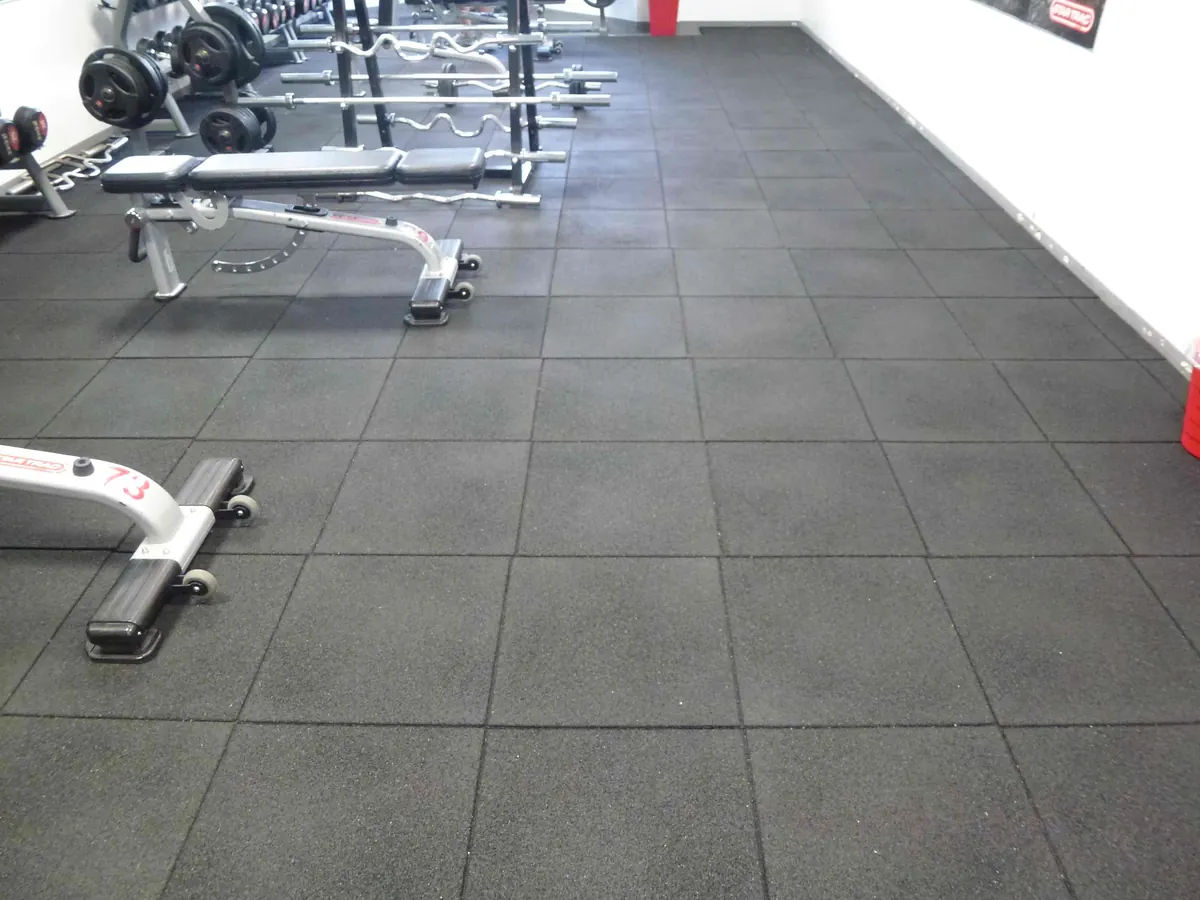
APPLICATION / FITNESS AND WELLNESS
Rubber gym flooring for gyms and fitness areas
Rubber tiles, rolls, interlocking systems, and accessories for designing surfaces for gyms, fitness centers, free-weight areas, functional training areas, and home gyms. The size, thickness, and configuration should be selected based on the type of activity, expected loads and impacts, the subfloor, and the installation method.
Fitness and Weight Training
Different solutions for cardio, bodyweight exercises, functional training, and free-weight areas
Rubber tiles and rolls
Modular formats, continuous surfaces, and interlocking systems
Load and Impact
The thickness must be appropriate for the intended use and expected loads
01 / Application
The flooring should be appropriate for the type of workout
A cardio room, a calisthenics area, and a free-weight zone do not all place the same stresses on the floor. The design must therefore be based on the intended activities and allocate floor tile sizes and thicknesses according to the different areas of the gym.
A surface designed for specific areas
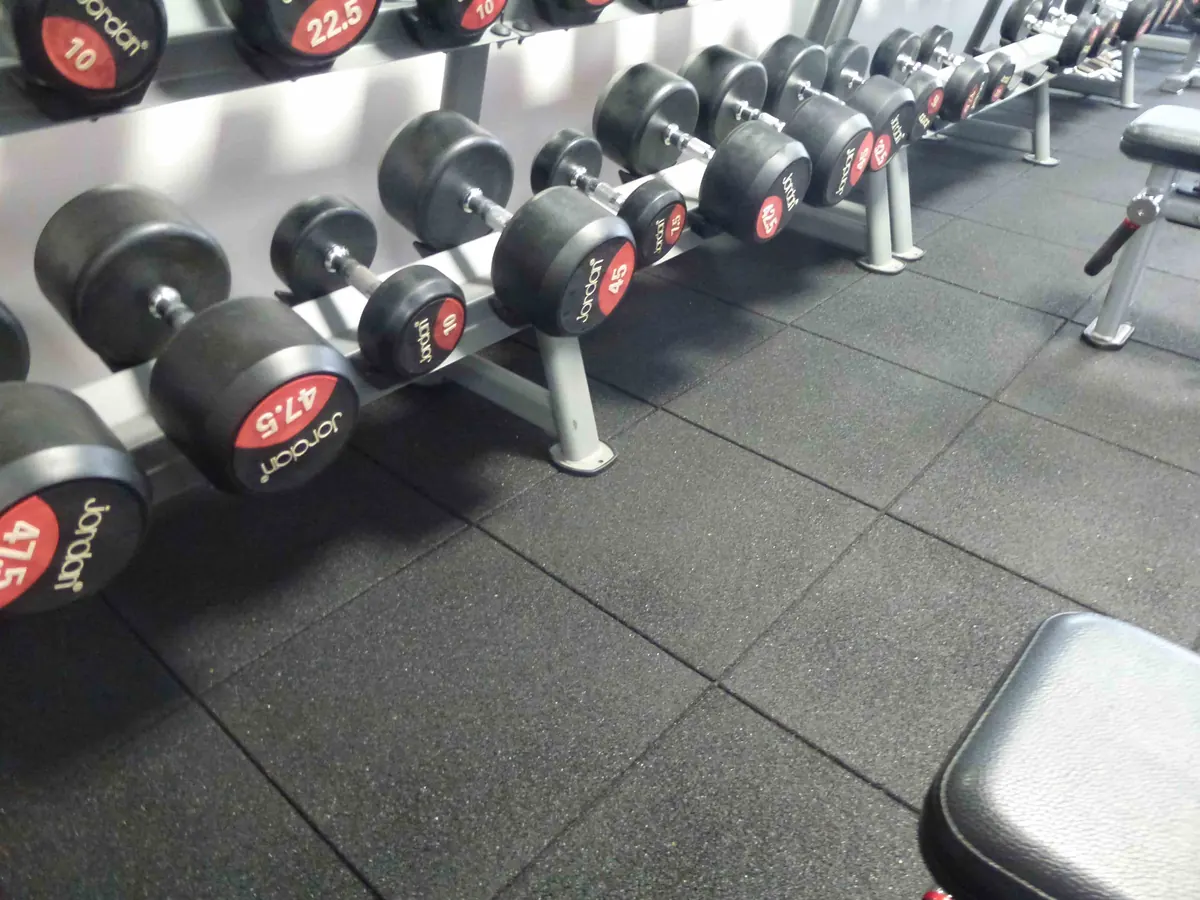
Activities
Cardio, bodyweight exercises, and weight training each have different requirements
Impact
The weight of the equipment and the intensity of use determine the choice of thickness
Laying
Uniform support, perimeters, and connectors complete the system
Thicker panels are suitable for applications where impact protection and stress resistance are key; thin rolls and systems, on the other hand, meet different needs for continuity, comfort, and ease of installation.
The product line also allows for aesthetic differentiation of the surface through various grain sizes, finishes, shapes, and decorative options, without compromising the required technical functionality.
When heavy equipment or free weights are present, it is particularly important to assess load distribution and the intensity of impacts. For less strenuous activities, thinner or easily removable solutions may also be considered.
There isn’t a single type of flooring for the entire gym: a zone-based design allows you to use the product that best suits each activity.
ACTIVITIES
How will the area be used?
Bodyweight exercises, cardio, functional training, and weight training require different surfaces.
LOAD
What equipment will be available?
Machines, racks, dumbbells, and barbells determine the intensity and distribution of the forces.
AREA
Which format is best?
Rubber tiles, rolls, or interlocking systems affect the number of joints, installation, maintenance, and ease of removal.
02 / Usage Contexts
Where to Use Rubber Sports Flooring
The product line is designed to meet the needs of both commercial and residential spaces with varying levels of use. However, the intended use of each specific product must be consistent with the intensity of use, the equipment present, and the performance requirements.
In professional gyms, the flooring must withstand heavy foot traffic, equipment, and areas subject to repeated impacts. In these environments, the size and thickness of the flooring play a key role.
For home gyms, cardio areas, stretching, and bodyweight workouts, even slimmer or easily removable configurations may be suitable, provided they are consistent with the actual loads involved.
The general guidelines are not a substitute for the technical data sheet: some products are specifically designed for professional settings, while others are intended for less demanding applications.
PROFESSIONAL
Gyms and Fitness Centers
Flooring for high-traffic areas, equipment rooms, functional training areas, and weight training zones.
WEIGHTLIFTING
Free-Weight Areas and Functional Training Areas
Areas where the flooring must be evaluated for concentrated loads, impacts, and repeated use.
FITNESS
Cardio, stretching, and bodyweight exercises
Areas where a seamless surface, comfort underfoot, and ease of cleaning can influence the choice.
PRIVATE
Home Gyms and Small Fitness Spaces
Low-profile or interlocking solutions may be considered for household use and moderate loads.
03 / Solutions
Rubber Gym Flooring and Accessories for Gyms and Fitness Areas
Explore our rubber gym flooring products. Each product page provides detailed information on size, thickness, composition, finishes, intended uses, claimed performance, available certifications, and installation instructions.
ECO-FLAME STOP GYM
Modular rubber flooring made from recycled rubber, designed for gyms and indoor fitness facilities, with a fire reaction classification of Bfl-s1 according to EN 13501-1.
Discover the product
ECO-GYM LAMINATED
Two-layer modular flooring for indoor fitness facilities, featuring a surface made of a co-molded SBR and EPDM blend on a recycled rubber base, available in tiles and various thicknesses.
Discover the product
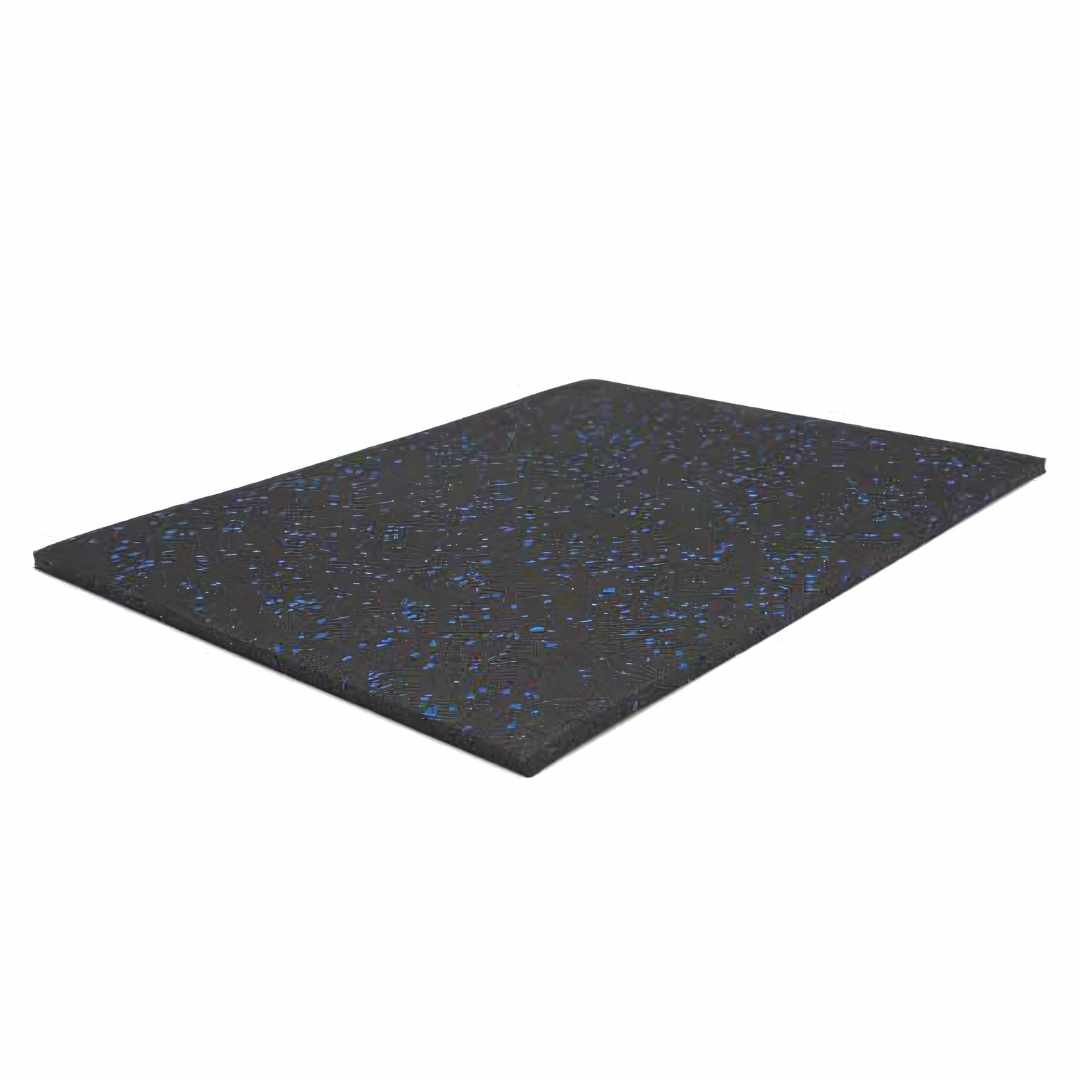
ECO-GYM MAT
Low-profile modular rubber mat, available in 1000 × 1000 mm tiles in thicknesses of 6, 8, and 10 mm for gyms, home gyms, and fitness areas.
Discover the product
ECO-GYM PERSONAL
A modular solution for gyms and functional training circuits, featuring recycled rubber tiles that can be customized with lines, symbols, shapes, and logos made of colored EPDM.
Discover the product
ECO-GYM RAMP
A sloped profile made of recycled rubber designed to bridge the height difference between the slabs and the existing floor, reducing the height difference along perimeters and access points.
Discover the product
ECO-GYM ROLL
Indoor resilient flooring made from recycled SBR rubber, supplied in 1,250-mm-wide rolls to minimize seams and ensure a uniform surface in training areas.
Discover the product
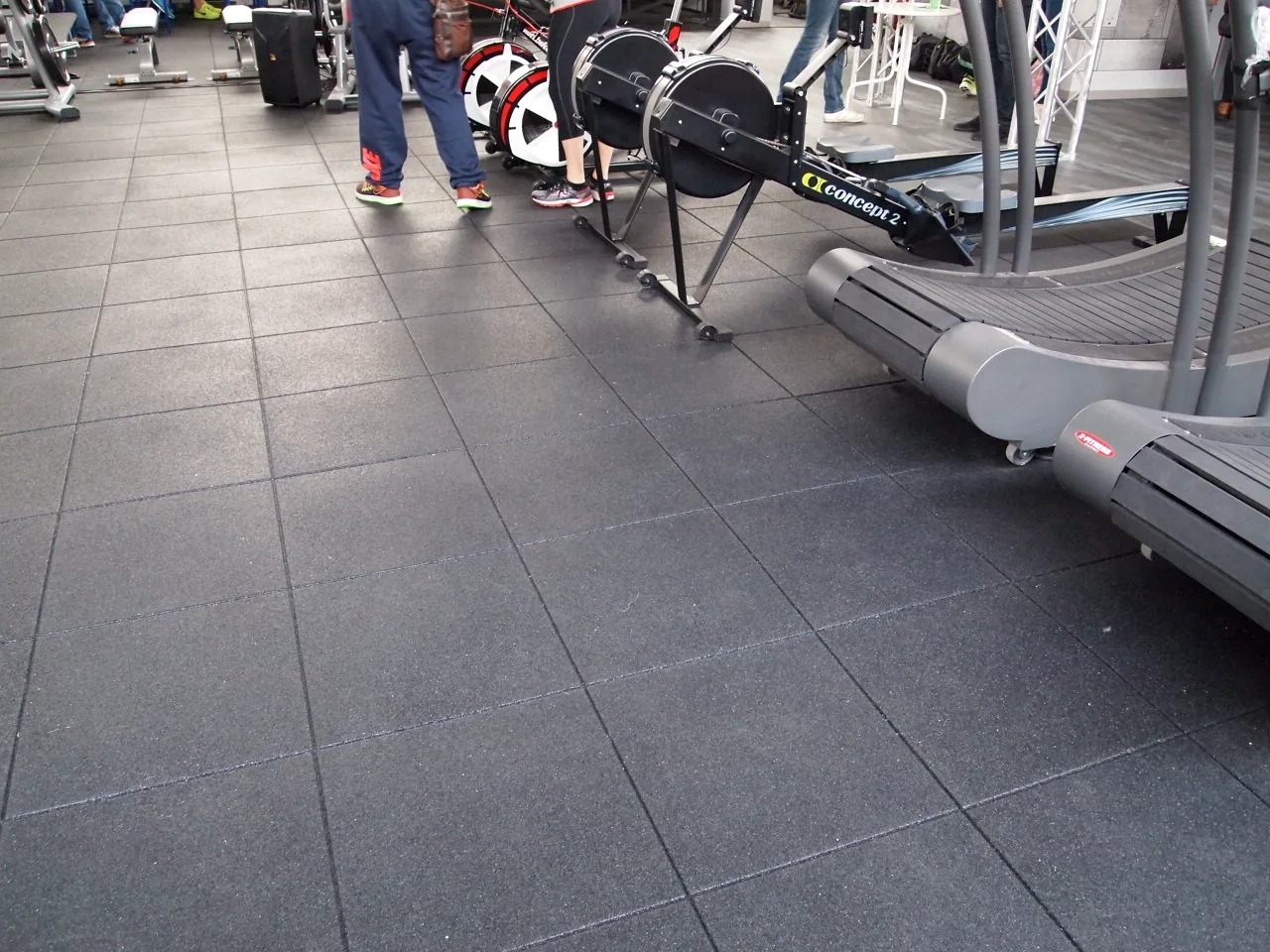
ECO-GYM TOP
Modular flooring made from ultra-fine-grained recycled SBR rubber, featuring a compact surface and a selection of sizes and thicknesses for free-weight areas, functional training areas, and fitness areas.
Discover the product
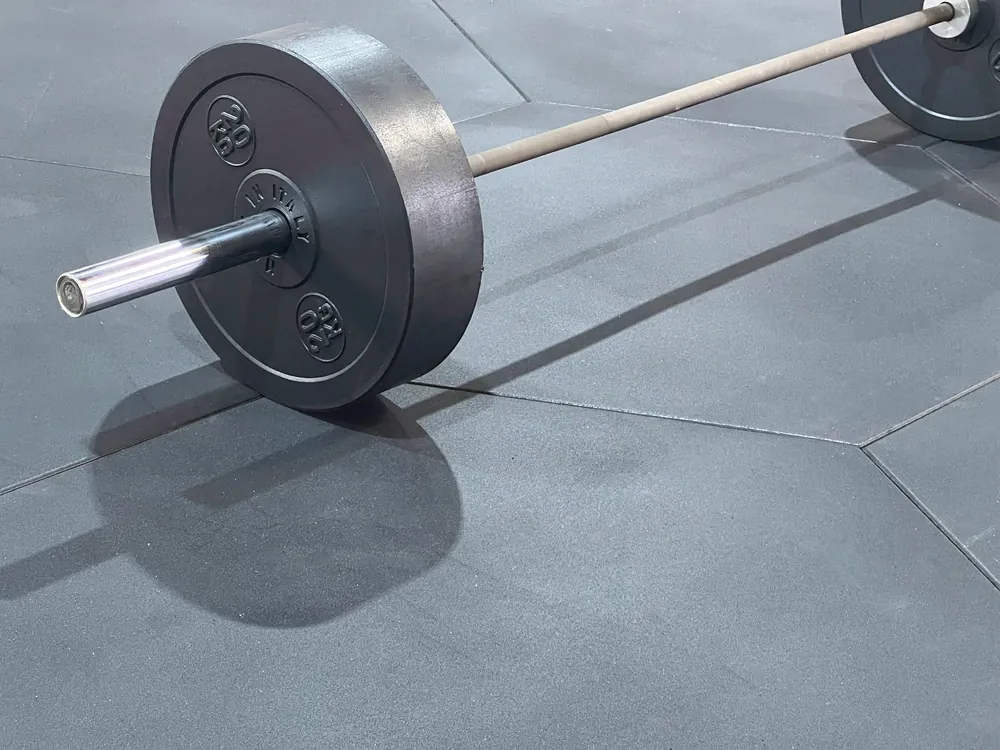
ECO-GYM TOP ESA
Modular flooring made of recycled SBR rubber with 1.15 m² hexagonal tiles, installed as a floating system and featuring a compact, ultra-fine-grain finish, designed for free-weight areas and large fitness areas.
Discover the product
ECO-GYM TOP FRAME
1000 × 1000 mm modular tiles for gyms and fitness areas, featuring a colored EPDM center insert and a black border to visually define zones and pathways.
Discover the product
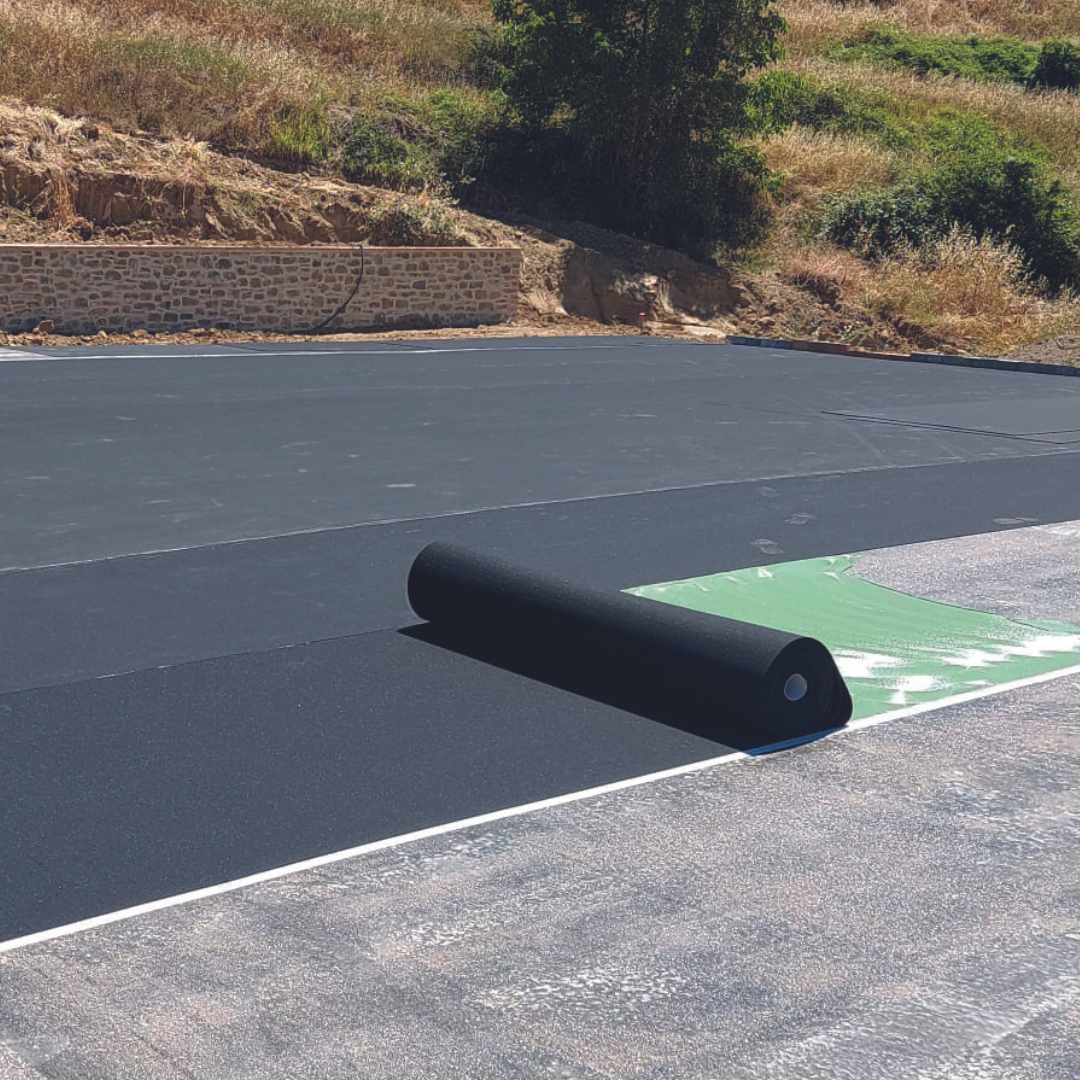
ECO-SPORT ROLL
Recycled SBR rubber roll for use as an elastic underlayment in multi-layer systems for athletic tracks, gyms, fitness centers, and indoor or outdoor sports surfaces.
Discover the product
04 / Design
How to Choose Flooring for a Gym
The choice of floor thickness should be based on the type of workout and the actual weights being used. In an area dedicated to barbells and weightlifting, the requirements are different from those in a cardio room or a stretching area.
The format also affects the design: tiles offer modularity and the ability to differentiate between areas, rolls minimize seams, while interlocking systems simplify installation and removal in specific applications.
Performance specifications, certifications, recycled content, and installation instructions must refer to the specific product code and the version actually ordered.
USE
Define Training Zones
Identify cardio, weight training, functional training, stretching, and other areas before choosing a product.
THICKNESS
Assess Load and Impact
Greater thickness does not automatically mean a better solution: the choice should be based on the intended use.
FORMAT
Choose between rubber tiles, rolls, or interlocking systems
The number of joints, the room’s layout, maintenance, and future removal all influence the choice.
REQUIREMENTS
Check for specific requirements
Fire resistance, environmental documentation, and other performance characteristics must be verified against the selected reference standard.
05 / Materials
Recycled SBR rubber and finishes for fitness facilities
The ECO-WELLNESS line includes flooring made primarily from recycled rubber derived from end-of-life tyres, processed into different particle sizes and configurations depending on the product.
Medium-grain solutions emphasize a sturdy and versatile structure, while products made with finer granules result in more compact and uniform surfaces. Some versions also combine an SBR base with percentages or layers of EPDM to achieve decorative finishes.
Rubber tiles and rolls may contain varying percentages of recycled material. For specific products, REMADE® certification is also available upon request, subject to the conditions outlined in the relevant product data sheets.
It is therefore incorrect to assume that the entire product line shares the same composition, recycled content percentage, certification, or performance: the reference should always be the up-to-date documentation for the selected product.
06 / Frequently Asked Questions
Questions About Gym Flooring
The key factors to consider when comparing thicknesses, sizes, and solutions for the different areas of a fitness facility.
What thickness should you choose for a weight training area?
It depends on the type of equipment, the weights used, the frequency of impacts, and the subfloor. For areas subject to heavy loads, it is advisable to compare the thicker options and their technical specifications.
Is it better to use tiles or roll flooring?
It depends on the intended use. Rubber tiles offer greater modularity and a wide range of thicknesses; rolls help reduce the number of seams and are particularly suitable for cardio, stretching, bodyweight training, and other lower-impact areas.
Do you always need adhesive to install flooring?
No. Multiple tiles can be laid loose on a uniform, flat, and clean surface. Rolls and products with square edges, on the other hand, may require partial or full fastening, depending on the project. Interlocking systems have specific installation procedures.
Is the same flooring suitable for both home gyms and professional gyms?
Not necessarily. Some models are designed for heavy-duty use and heavy equipment, while other slimmer or lighter options are best suited for home gyms, light fitness, and less demanding uses.
Are there any flooring materials with specific fire-resistance requirements?
Yes. The product line includes ECO-FLAME STOP GYM, a specific model with a Bfl-s1 fire reaction classification. This requirement should not be automatically extended to the other products in the line.
What information is needed to request an evaluation?
It is helpful to provide the dimensions and floor plan of the gym, the intended use of the various areas, the planned equipment, the type and approximate weight of the loads, the existing subfloor, any fire-resistance requirements, and preferences regarding size, color, and finish.
From Training to the Court
Are you planning a gym or a fitness area?
Share the dimensions, planned activities, and equipment to be installed. This information helps identify the sizes, thicknesses, and product codes to be further explored for the various areas of the project.
Before making contact, prepare the following:
- dimensions or floor plans of the rooms;
- intended use of the various areas;
- required equipment and weights;
- type of existing subfloor;
- any technical or fire-resistance requirements;
- preferences regarding thickness, size, color, and finish.